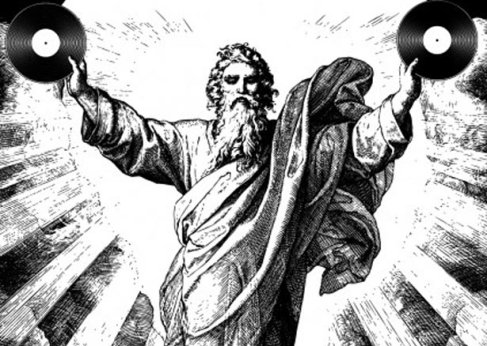
Music is a direct link to the gods and has the ability to allow communication through time and space.

7 responses to “Music is a direct link to the gods and has the ability to allow communication through time and space.”
-
The Ascension Manual http://t.co/pxq402o8MA pic.twitter.com/mMWmzg6Slx
— Apollo Solaris☼ (@fbuijsadvies) 28 april 2015
Back to HOMEPAGE☼
“GOD IS; I AM; WE ARE”
“BE GOOD, BE LEGAL, TELL TRUTH”
Love & Light ~Apollo -
@EscalonaElvira @ranasilvia63 @fountain_colin @devrimakyurt @saqran61 @narottam_dixit @MrNaassir @YouTube pic.twitter.com/xNeUAu6Iww
— 愛美羽(Amiha) (@amiha_mu) 16 maart 2016
Back to HOMEPAGE☼
-

Ik vind een @YouTube-video leuk: https://t.co/Ib7G6XryhN Nibana – I Am a Soul
— Apollo Solaris☀ (@fbuijsadvies) 1 november 2017
Spiritual Exhaustion: When You Are Tired After Spiritual Awakening#Spiritual #Awakening #Exhaustion https://t.co/NQcl4zFnry
— Readings With Rose (@RosesReadings) 2 november 2017
Back to HOMEPAGE☀
“GOD IS; I AM; WE ARE”
“BE GOOD, BE LEGAL, TELL TRUTH”
Love & Light ~Apollo -

DAVID BOWIE Rebel Rebel 1974 HQ https://t.co/hc1P4NppKB via @YouTube Just for you! 🌟⚡⚡🌟
— Linda C (@Loobydoobs) 25 januari 2018
Ik vind een @YouTube-video leuk: https://t.co/Z2tzMUJWd8 Stereo Mc's Connected EXTENDED HD HQ
— Apollo Solaris (@fbuijsadvies) 25 januari 2018
RELATED: SUNKINGZ MUSIC GEOMETRY | Music is a direct link to the gods and has the ability to allow communication through time and space.
💜🙏🏽💓💖 pic.twitter.com/jK62zz2aIq
— 💜 Twin Flame 💜 (@shopTFI) 25 januari 2018
The better you feel, the better life gets.
— The Secret (@thesecret) 25 januari 2018
RELATED: Revolution is an Inside Job (The only war of Armageddon is within ourselves)
Snap! – Rhythm is a Dancer https://t.co/rnPd2SptxD via @YouTube
— VANDMAN (@vandman777) 26 januari 2018
Yes… ❤ pic.twitter.com/1xt67qBj8C
— Makas (@Makas_Electra) 27 januari 2018
Back to HOMEPAGE☀
“GOD IS; I AM; WE ARE”
“BE GOOD, BE LEGAL, TELL TRUTH”
Love & Light ~Apollo -
— TrutherbotAnyone (@TrutherbotAnyo2) 18 oktober 2018
Back to HOMEPAGE☀
“GOD IS; I AM; WE ARE”
“BE GOOD, BE LEGAL, TELL TRUTH”
Love & Light ~Apollo -
THE ASCENSION GATEWAYS: Entering the Realm of the Otherworlds Ascension, Spiritual Perspectives / Sunday, January 1st, 2017
Read more at: https://www.abzu2.com/the-ascension-gateways-entering-the-realm-of-the-otherworlds/
-
But what has music to do with brain function? Modern scanning studies have revealed a major influence of musical sound on brain activity and particularly in overall brain binding and connectivity. In this musical framework, it is of great interest that music is increasingly used in therapy of brain disorders and cognition studies.
Music engages much of the brain and coordinates a wide range of processing mechanisms. This naturally invites consideration of how music processing in the brain might relate to other complex dynamical abilities.
Lyrics
Did you ever want it?
Did you want it bad?
Ohhh, my
It tears me apart
Did you ever fight it?
All of the pain
So much pride
Running through my veinsBleeding, I’m bleeding
My cold little heart
Oh I, I can’t stand myselfAnd I know
In my heart, in this cold heart
I can live or I can die
I believe if I just try
You believe in you and I
In you and I
In you and I
In you and IDid you ever notice
I’ve been ashamed
All my life
I’ve been playing games
We can try and hide it
It’s all the same
I’ve been losing you
One day at a timeBleeding, I’m bleeding
My cold little heart
Oh I, I can’t stand myselfAnd I know
In my heart, in this cold heart
I can live or I can die
I believe if I just try
You believe in you and I
In my heart, in this cold heart
I can live or I can die
I believe if I just try
You believe in you and I
In you and I
In you and I
In you and I
In you and I
In you and I
In you and I
In you and IMaybe this time I can be strong
But since I know who I am
I’m probably wrong
Maybe this time I can go far
But thinking about where I’ve been
Ain’t helping me start#Kiwanuka
Spiritual Use of Sound
I learned about overtone singing in 2002 after researching the use of sound in ancient stone levitation. I remember demonstrating it to Carissa back then. I projected my voice into the kitchen, sounding out vowels and using my mouth to modulate the harmonics so that different whistling sounds were emphasized atop the base vocal sound. After my demo ended, we noticed our cat Kitty staring at the ceiling where my voice was aimed, just sitting there and watching it for the next hour fascinated and entranced as if watching television. I think I opened a portal or created a thoughtform that she could see, as she could see cloaked aliens and other entities so she definitely had second sight that could perceive the etheric/astral…
I just started looking into this again, and recalled that the Eckankar spiritual group sings the word “Hu” (pronounced hue) as part of their daily practice. They say it connects them with God and puts them at peace. I suspect this practice derives from Sufi and Rosicrucian traditions.
Then I realized, “hue” is a simplified form of overtone singing. If you don’t know about overtone singing, you might sing Hu incorrectly. But with overtone singing you can hit all the harmonics as Hu must have originally been intended to do.
On a side note, what makes vowels distinct is that aside from the base pitch of the voice, the mouth, lips, teeth, and jaw filter out some harmonics and let others through, creating a “color” of sound that we recognize as ohhh vs. ahhh vs. eeeee and so on. Same thing in the Great Pyramid where the vertical sliding slabs in the antechamber filter sounds created in the Grand Gallery to produce vowel sounds in what was likely a dense electrical plasma.
Point being, combining feeling with vowel sounds, especially overtone singing, seems to have positive, magickal, spiritual, etheric, and astral effects. Here are videos that cover the spectrum:
1. Short intro to vocal toning using vowels and feeling: https://www.youtube.com/watch?v=zRW8Aq_LDNg
2. How Eckankar does it: https://www.youtube.com/watch?v=e_v8chCqvHU
3. What Eckankar youth think about it: https://www.youtube.com/watch?v=wc9N_g2NolA
4. Demonstration of overtone singing with spectral graphs showing exactly what’s going on with the frequencies when it’s done. Only the first 5 minutes or so are important to check out. Turns out that “Hu” is really an overtone singing technique even if the Eck people don’t realize or explicitly say it. Meaning, overtone singing is the proper way to do Hu, and the power isn’t limited only to “Hu” but includes other overtone sounds and melodies.
5. Short tutorial on how to do it yourself:
6. Alex Glenfield giving a much deeper and fuller explanation and instruction on how to do it. No need to watch this unless interested in a deep dive: https://www.youtube.com/watch?v=D5J5Bc2-SlU&ab_channel=AlexGlenfield
So, these are different avenues of using sound, from the more general and new agey to the more traditional and scientific, and I’m sure there’s a universal “ultimate” system that doesn’t publicly exist yet, of which what’s in the above vids are just fragments. Since these are just vowels and not words, there’s no religious gloss and no ritualistic “monkey see monkey do” recitation of complex mantras. It’s universal and as good on Earth as on another planet where humanoids have vocal cords.
But the above vids give an idea of what directions to explore. I think the important thing is combining sound with feeling, and incorporating overtone singing as it seems they amplify the effects.

 Apollo Solaris
Leave a reply to apollosolaris Cancel reply